 Eleven Consult
1,500+ supplier invoices a month, read and matched by AI.
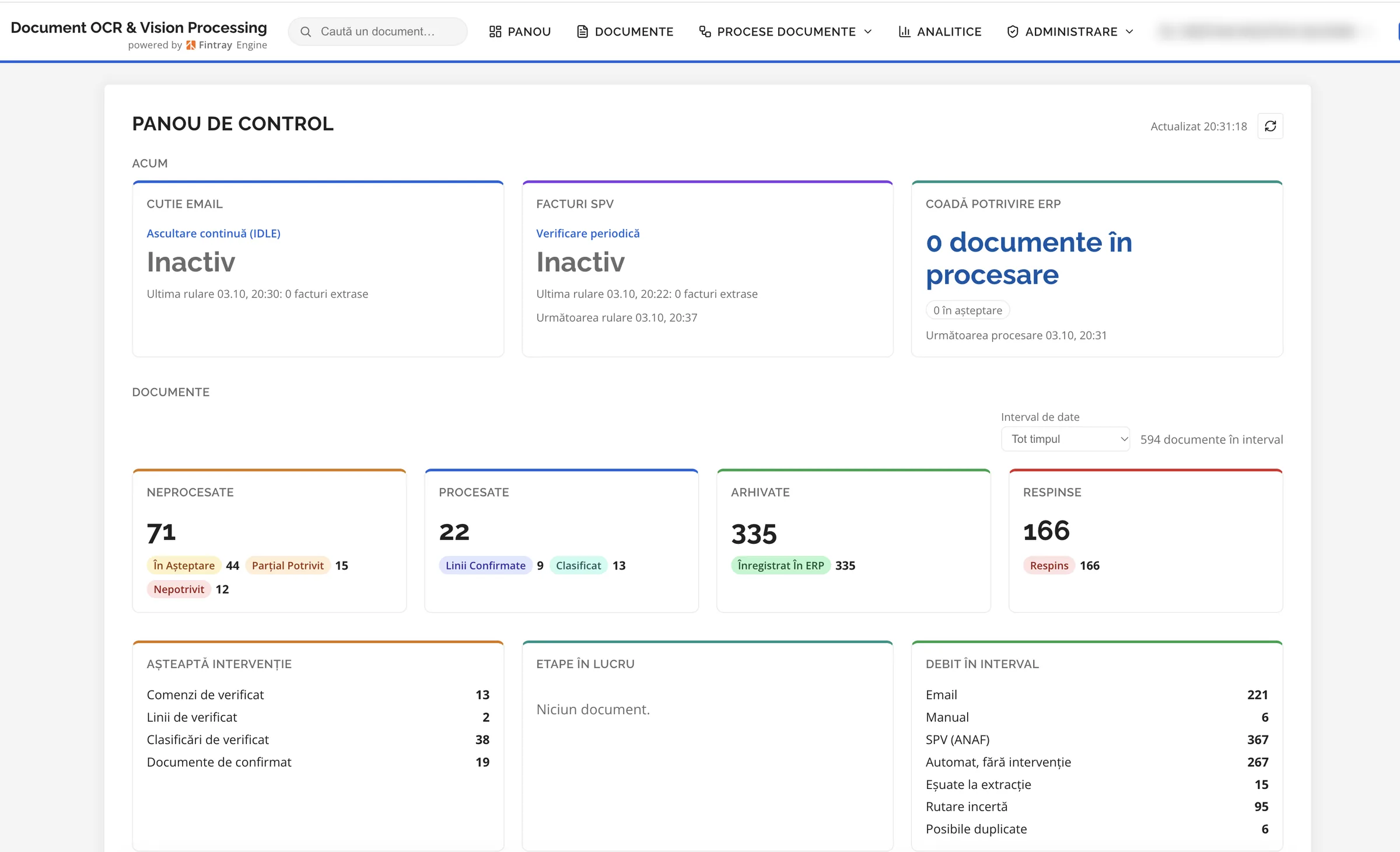
A manufacturing company moved its supplier documents from manual keying to an AI pipeline built on Fintray: read on arrival, matched to purchase orders line by line and registered in Charisma ERP. People settle only what the system flags.
supplier invoices a month
matched to their order with no human touch
intake channels, one work list
The context, and what the work involved.
Invoices, delivery notes and proformas arrived by e-mail, through ANAF e-Factura or as paper scans, in dozens of layouts and several languages. Each one was read, matched to its purchase order, checked line by line and keyed into Charisma by hand.
The aim was not to take people out of the process but to move them: from typing documents in to deciding the cases that genuinely need a decision.
- One work list for every channel: a watched mailbox, ANAF e-Factura and paper scans.
- Every line read by AI, on the company's own server first and in the cloud only as a fallback; e-Factura XML read exactly, with no AI at all.
- Each document routed to the order flow (goods) or the no-order flow (services, utilities, rent).
- Supplier identified by VAT code, purchase order selected, lines matched; every match a person confirms becomes a rule for that supplier.
- The ERP document drafted and registered in Charisma in one click, or unattended where the company switched it on.
- Duplicates caught before registration, such as the same invoice arriving as a PDF and as e-Factura.
- A complete audit trail: who confirmed, corrected and registered what, and when.
Automation that refuses to guess also shows where the process breaks.
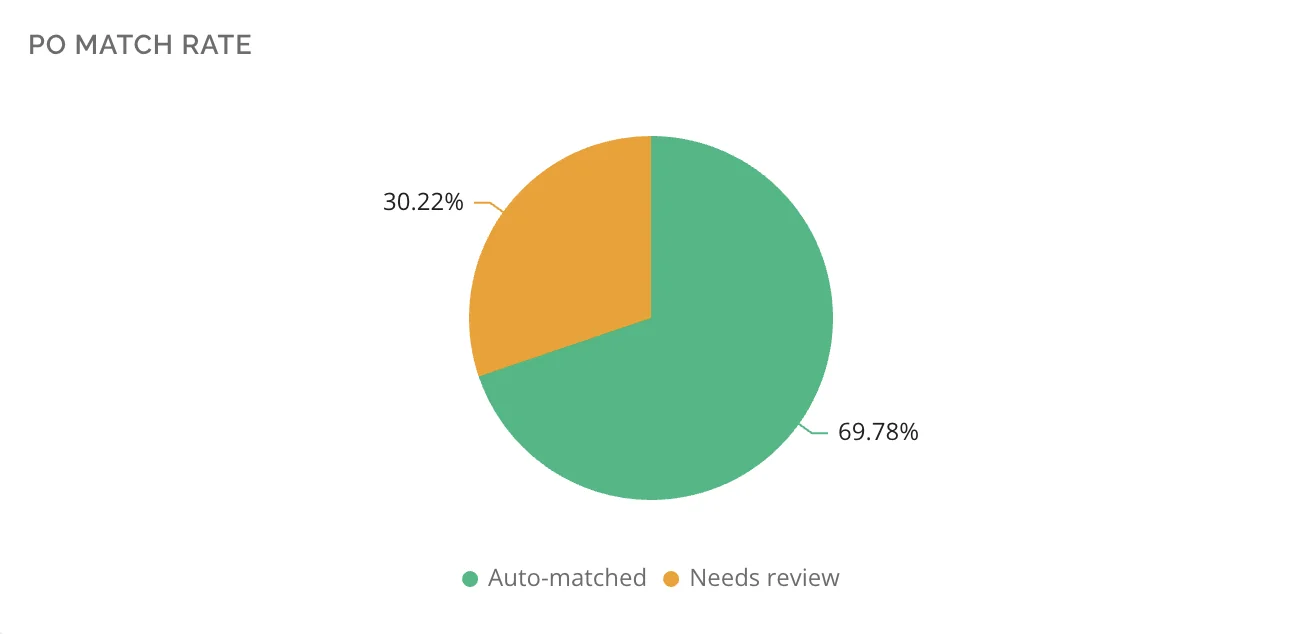
In its first weeks, about 70% of order-based invoices matched their purchase order with no human touch. Much of the rest stopped for reasons that sit outside the software, above all orders never confirmed in the ERP.
Because the system will not guess, every one of those cases surfaced in one place, with its reason. The company used them to correct internal processes and long-standing data errors, and each correction raises the share of invoices that go through untouched.
The accountant's job moved from keying in data to settling the cases the system flags. Automation earns trust by stopping when it isn't sure.
Sector
Manufacturing · Finance operations
Selected experience includes work delivered by the founders in previous executive and consulting roles, alongside engagements delivered through Eleven Consult.
Other transformations.
Facing a transformation like this one?
Tell us what you're trying to change, where you're stuck or what you need to get moving. No sales pitch. No predefined package.